
Design by Tradition: The Story Behind Four Seasons Resort The Nam Hai
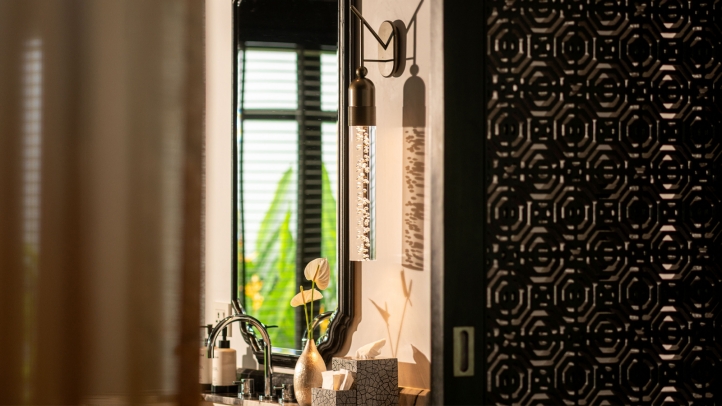
Luxury resorts are often defined by what guests see. At Four Seasons Resort The Nam Hai, Hoi An, Vietnam, the more interesting story lies in what guests may not immediately notice: nearly every architectural detail, spatial arrangement and design element is rooted in Vietnam's cultural heritage. What appears effortlessly elegant is, in fact, a carefully considered interpretation of centuries-old Vietnamese design traditions.
Inspired by the Vietnamese Garden House
Originally designed by Paris-based architectural firm AW2, the resort draws its inspiration from the traditional nha vuon, or "garden house," found throughout Central Vietnam and the former imperial capital of Hue. Rather than replicating these historic homes, the architects reinterpreted them for contemporary living, preserving their relationship with nature, emphasis on harmony and distinctive architectural forms.
The villas' pitched roofs, timber elements, layered interiors and strong connection to the surrounding gardens all reference this architectural heritage. Throughout the resort, guests encounter subtle nods to Vietnamese culture that go far beyond decorative aesthetics.
The Sleep Temple: A Signature Design Feature
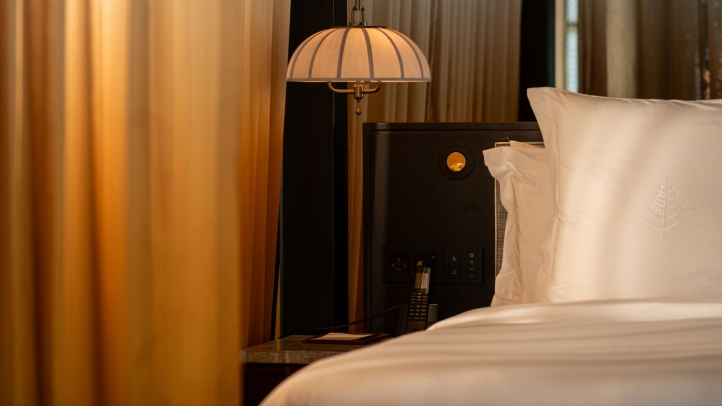
At the heart of every villa is one of The Nam Hai's most iconic design elements: the elevated platform bed, known internally as the "Sleep Temple."
Inspired by the traditional Vietnamese phan, a multifunctional platform that historically served as a place to sleep, gather, work and socialise, the resort's design transforms this cultural feature into a luxurious focal point. Suspended beneath soaring ceilings and framed by soft drapery, the Sleep Temple creates a sense of ceremony while maintaining a strong connection to Vietnamese domestic architecture.
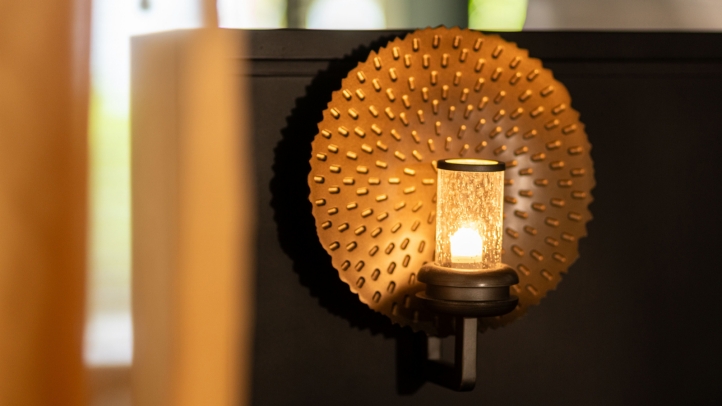
Recent villa enhancements have further elevated this signature feature through contemporary furnishings, bespoke lighting inspired by the traditional nón lá conical hat, and carefully curated artisan details.
A Contemporary Reimagining
While the resort honours its original architectural vision, recent villa renovations have introduced a fresh perspective. Led by design firm HBA, the redesign preserves key architectural elements while incorporating lighter materials, natural finishes and contemporary Indochine influences. New bay windows bring in additional daylight, while refreshed interiors feature locally crafted materials, artisanal details and a palette inspired by the natural colours of Central Vietnam.
The result is a seamless dialogue between past and present, where traditional Vietnamese references coexist with modern luxury and comfort.
A Resort Shaped by Water, Landscape and Phong Thuy
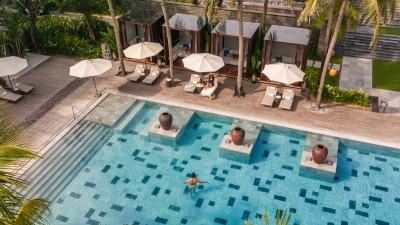
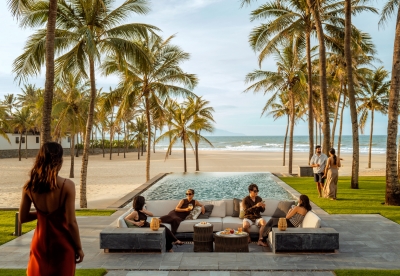
Beyond the villas, the resort's masterplan reflects another important Vietnamese design principle: phong thuy (feng shui), or the relationship between wind, water and landscape. The resort's dramatic central axis leads the eye from the reception pavilion through a series of reflecting pools and palm-lined vistas towards the East Sea beyond.
Rows of approximately 4,500 coconut palms, expansive stairways, traditional ceramic jars and carefully framed sightlines all contribute to a sense of order, balance and tranquillity. Throughout the resort, architecture and landscape are designed to work together rather than exist separately, echoing principles found in Vietnam's royal palaces and historic garden houses.
Preserving a Sense of Place
One of the resort's most meaningful architectural features is not new at all. Hidden among the villas stands the historic Thanh Hoang Temple, rebuilt on its original footprint and preserved as an important part of the local community's cultural heritage. For generations, fishermen worshipped here before heading out to sea, and the temple continues to hold spiritual significance today.
Its presence serves as a reminder that The Nam Hai was never intended to be a resort that could exist anywhere in the world. From the lantern motifs inspired by nearby Hoi An to the reinterpretation of traditional Vietnamese homes, every aspect of the design reflects a deep connection to place.
More Than Beautiful Spaces
For travellers with an interest in architecture and design, Four Seasons Resort The Nam Hai offers more than beautiful villas and ocean views. It offers a chance to experience how cultural heritage, contemporary luxury and thoughtful storytelling can come together through design. Every roofline, pathway and pavilion contributes to a larger narrative, one that celebrates the architectural traditions of Vietnam while creating a resort experience that feels distinctly modern.
RELATED:

Da Nang City,
Vietnam
 @FourSeasonsPR