
Four Seasons Resort Lanai Offers Astrotourism with On-Site Observatory
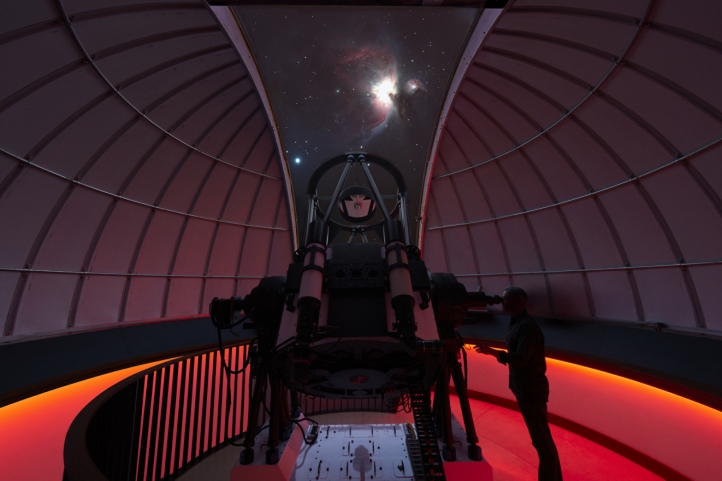
Experience the skies and culture at Four Seasons Resort Lanai at the Lanai Observatory, a unique astrotourism experience for Resort guests, Lanai residents and students.
The Kilo Hōkū Experience is a cultural program from Love Lanai, and cultural advisors share ʻike kūpuna (ancestral knowledge) of the celestial sphere as well as guide guests on a tour of the night sky. In the Hawaiian language, Kilo may be interpreted as "an observer," or "to observe," and hōkū may be interpreted as "star." Lanai is an ideal location to observe the stars, with low levels of atmospheric and light pollution to facilitate stargazing.
Love Lanai Cultural Practitioners spent many hours meticulously researching primary ʻŌlelo Hawaiʻi (Hawaiian language) resources, such as newspapers and scholarly writings from the 1800s, to develop program scripts and uncover star stories shared within the Hawaiian culture.
The Love Lanai team dedicates many hours of learning not only to the operations of the telescope and the skies, but also to the history of ancient wayfinding and the methods of traditional, non-instrument navigation that Native Hawaiians and people of the Pacific utilize today in attempts to retrace the voyages of our past to reclaim ancestral knowledge.
The Kilo Hōkū Experience begins by sharing how Indigenous Hawaiians and people of the Pacific utilized the celestial bodies and elements of the natural environment to guide their way on the ocean. It is thought that voyages between Hawaiʻi and the South Pacific occurred as early as 400 AD. A keenly developed ability to read the night sky helped early Polynesians find their way from island to island across the Pacific, and ultimately to Hawai‘i. The wayfinder utilized their knowledge of ka lani paʻa - the celestial sphere - to guide their voyaging canoes over thousands of miles of open ocean. The expansive Pacific Ocean served as a superhighway, binding cultures together.
Following the presentation, guests are guided through a viewing experience that utilizes the 1-metre (3.28 foot) telescope. Guests can look deep into the night sky at various celestial bodies such as planets, star clusters, galaxies, nebulae, and the spectacular moon.
The telescope is housed in a two-storey domed structure that spans approximately 25 feet in diameter (7.62 metres). Made by PlaneWave Instruments, the PW1000 is an observatory-class telescope featuring a direct drive altitude-azimuth (Alt-Az) mounting system, stands 135 inches (3.43 metres) high and weighs approximately 1,361 kilograms (3,000 pounds).
Each session lasts one hour, including a safety briefing and information about lenses. Timing will change throughout the year due to the sunset and visibility of natural rotation of the sky. Guests can visit the Resort’s online activity calendar for day tours of the facility and special programming. Private sessions are also available.
Glossary of Hawaiian Star Names
- Hōkū - Star
- ‘A‘ā - Sirius
- Hānaiakamalama - Southern Cross
- Hōkūpa‘a - Polaris
- ‘Iwakeli‘i - Cassiopeia
- Kaheiheionākeiki - Orion
- Kauluakoko - Betelgeuse
- Makali‘i - Pleiades
- Nāhiku - Big Dipper
- Nākao - Orion's belt and sword
RELATED:

Los Angeles, 90045
USA
 @FourSeasonsPR