
Four Seasons Hotel Beijing Reimagines and Reopens Mio as a Tuscan Grill
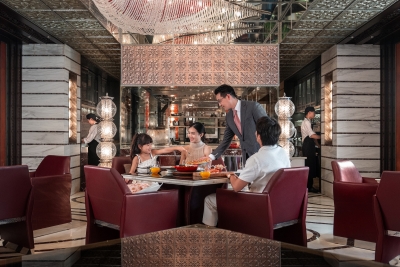
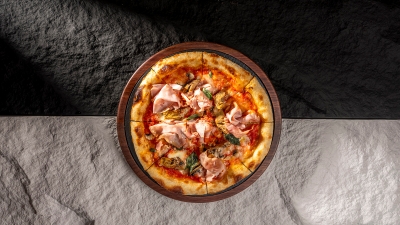
Four Seasons Hotel Beijing has reopened Mio as a Tuscan Grill, led by Chef Francesco Magni, marking a shift from intricate fine dining to a more elemental, shared‑plates approach. Originally opened in November 2012, the restaurant reopened following a complete concept overhaul, unveiling a bold new chapter inspired by the hospitality and conviviality of Tuscany.
The move comes as Beijing’s competitive luxury dining scene sees growing demand for more approachable, shareable experiences without compromising on quality. Mio’s transformation into a Tuscan grill responds directly to this shift—offering the spirit of Italian hospitality in a relaxed, refined setting.
Chef Francesco, a native of Lake Como whose career spans Michelin-starred kitchens across Italy, Dublin, Sydney and Macau—where he most recently spent three years leading Casa Don Alfonso, part of the Don Alfonso 1890 group—brings a philosophy of generosity, directness and shared joy to the table.
“Tuscany is where Italian culture and language stem from,” says Chef Francesco. “It’s a historic region with profound influence on every other part of Italy—a place of unhurried warmth, where people know how to live well. At Mio, that means we aren’t too formal. We still work only with the finest ingredients and ensure elegant service, but we want people to experience the feeling of walking into a restaurant in Tuscany. You feel at home. You can share a moment with family or friends and know you are well taken care of.”
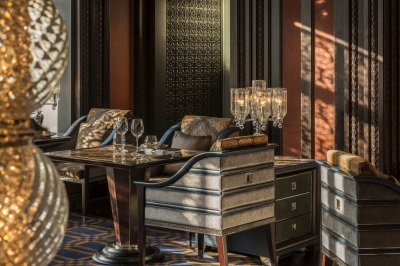
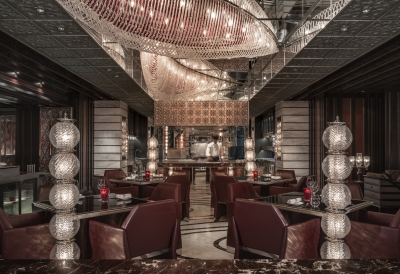
This spirit is reflected across Mio, from its open kitchen and inviting atmosphere to its friendly service and, most directly, its food.
Signature Dishes
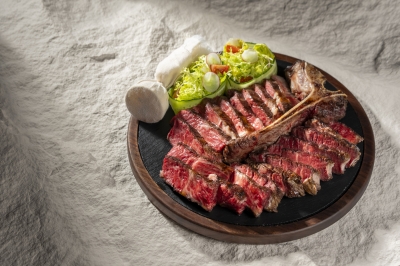
Australian Wagyu Beef Porterhouse MB 7
La Fiorentina, Florence’s famed charcoal-grilled Porterhouse steak, arrives with little adornment: just Italian salt, olive oil and black pepper. Using Australian M7 Wagyu, the steak is cooked at an extremely high temperature to develop a deeply caramelized crust while preserving its natural juices, then finished with rosemary smoke. “The focus is always on the quality of the ingredient itself,” says Chef Francesco. “Our technique is there to enhance what’s already excellent. Sauces can be complementary, but we season simply because we want the customer to taste how good the steak really is.”
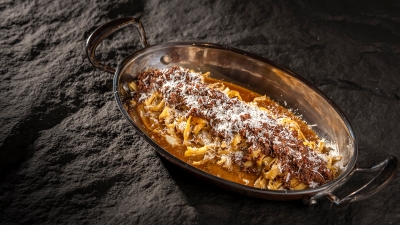
Homemade Pici Pasta, Duck Ragout, Tuscan Pecorino Cheese
Homemade pici pasta with duck ragù represents a return to Tuscan pasta-making traditions. The thick, hand-rolled, eggless pasta originates from the Chianti region and is designed specifically to hold rich sauces. Finished with Tuscan Pecorino, the dish honours a pairing perfected over four centuries—a match that needs no modern intervention.
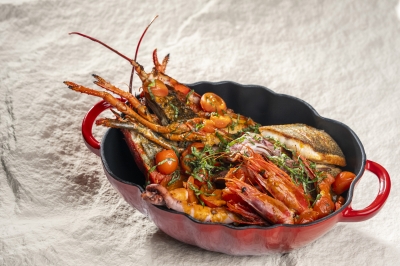
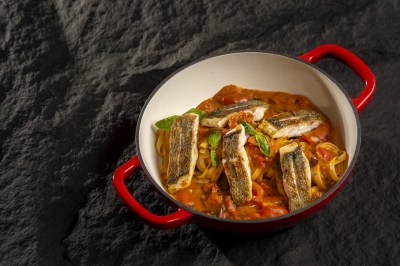
Traditional Tuscan Seafood Casserole with Whole Boston Lobster
A rich seafood stew from the Tuscan coastal town of Livorno emphasises that Tuscany is a multi-layered terroir stretching from abundant seas to fertile hills. Here, Chef Francesco refines tradition by cooking each element separately—lobster, octopus, squid, prawns, clams and seasonal fish—to preserve individual texture and flavour before assembling them into a single, harmonious dish. “Everywhere you go on the Tuscan coastline, you see huge natural growths of amazing aromatic herbs,” he notes. “That coastal landscape shapes everything about how we cook seafood.”
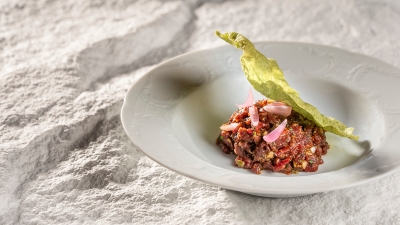
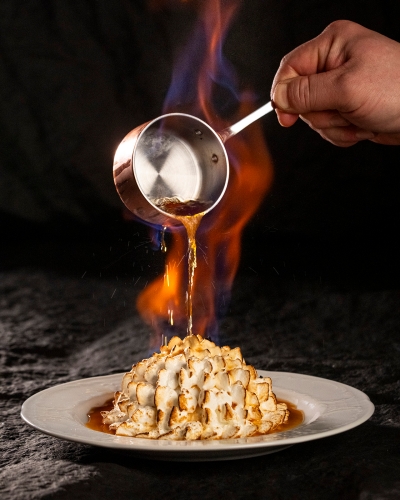
Tableside service adds a layer of theatre and hospitality to the Mio experience. When chefs prepare Tartare di Scottona tableside—using young heifer beef valued for its finer flavour and tenderness—or flambé Lo Zuccotto Fiorentino with rum, the meal becomes a point of conversation. “We want to explain how and why we’re doing a dish a certain way,” says Chef Francesco. “It’s a moment of discussion, an opportunity to exchange something about Italian culture.”
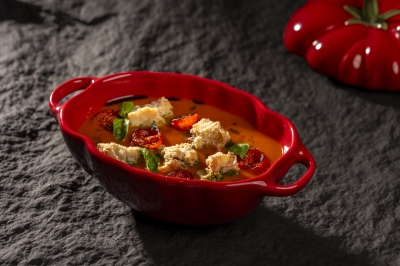
The evolution of Mio has also allowed Chef Francesco to explore Italian culinary heritage more deeply—and, perhaps, unexpectedly, to find common ground with China. “When you look at the importance of family, of eating together and the convivial sharing of food, there is so much in common between our two countries,” he says. “In China, there are dumplings and noodles. In Italy, we have tortelli and spaghetti. Ten thousand kilometres apart, and we ended up making the same foods.” This philosophy extends to ingredients as well. La Pappa al Pomodoro, the traditional Tuscan tomato soup born from humble origins, uses both Italian San Marzano and locally sourced Chinese tomatoes—each bringing its own character to a dish that, like Mio itself, draws strength from both traditions.
That same spirit of bridging Italian heritage with local discovery extends to the glass. A curated wine list spans Italy’s regions with an emphasis on Tuscany, offering both discovery and exploration— ranging from a bold Super Tuscan like Antinori or Sassicaia poured by the glass using the Coravin system to Chianti, Montepulciano and Brunello by the bottle. The cocktail program is equally rooted in Italian tradition. Classics like the Negroni and Aperol Spritz sit alongside originals such as the Chianti Breeze and Toscana Sunset, with house-made Limoncello and truffle-infused Amaro as signatures.
At Mio, the spirit of Tuscany and Beijing conviviality meets at the table. Under Chef Francesco’s direction, this is Italian dining at its most essential—unpretentious, ingredient-driven and built for sharing—finding its natural home within the heart of Four Seasons Hotel Beijing.

Beijing, 100125
China
Beijing, 100125
China
Beijing, 100125
China
Four Seasons Hotel Beijing
PRESS KIT