
History Meets Hospitality: Four Seasons Historic Properties

Across the global portfolio of Four Seasons, new stories are coming to life within the walls of its historic properties. From Renaissance palazzos and centuries-old convents to modernist icons, these buildings represent far more than remarkable places to stay, they are cultural touchstones that Four Seasons has thoughtfully restored and reimagined for today’s discerning traveller.
With each historical project, Four Seasons and our design partners approach restoration with deep respect for architectural integrity, cultural continuity and local craftsmanship. Collaborating with leading historians, artisans, restoration specialists, and conservation architects, Four Seasons ensures that every renovation honours the building’s original character while introducing modern comforts with subtlety and precision. The result: living landmarks that seamlessly blend the soul of the past with the excellence of Four Seasons hospitality.
AMERICAS
Beverly Wilshire, Beverly Hills, A Four Seasons Hotel
- Original Opening: 1928
- Historical Significance: This legendary hotel has been a mainstay for Hollywood and global elite since opening in the early 20th century. The Mediterranean-style pool is modelled after Sophia Loren’s private villa pool in Italy, and the hotel is home to the original flagship location of chef Wolfgang Puck’s restaurant CUT.
- Reopening as a Four Seasons: 1992
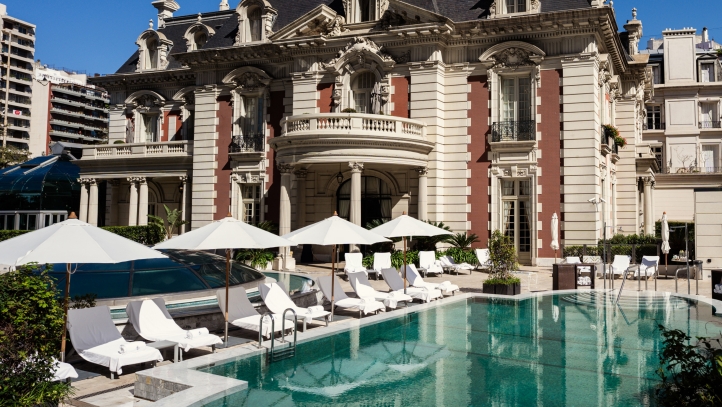
Four Seasons Hotel Buenos Aires
- Original Opening: 1920 (La Mansión)
- Historical Significance: La Mansión was commissioned as a wedding gift from Félix de Álzaga Unzué, a member of a prominent local family, for his bride Elena Peña, reflecting the grandeur the city’s Belle Époque style.
- Reopening as a Four Seasons: 1992
Four Seasons Hotel and Residences Cartagena
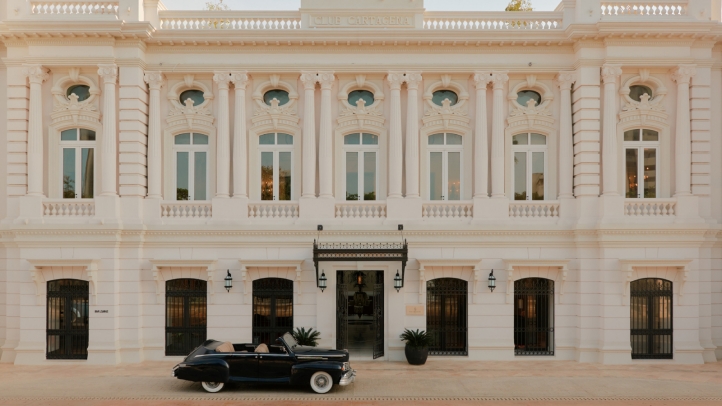
- Original Opening: 16th-century San Francisco Cloister and Temple, 1920s: Club Cartagena
- Historical Significance: The property encompasses several culturally significant buildings including the 16th-century San Francisco Cloister and Temple, and Club Cartagena, a 1920s Beaux-Arts landmark designed by French architect Gastón Lelarge. Located in the Getsemaní neighbourhood, where Cartagena’s traditional way of life and cultural identity remain vibrant, the property sits just steps from the UNESCO-listed Walled City.
- Opening as a Four Seasons: 2026
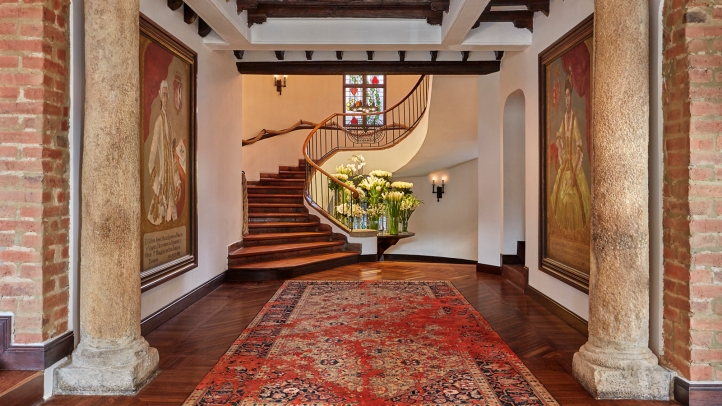
Four Seasons Hotel Casa Medina Bogotá
- Original Opening: 1946
- Historical significance: Designed by renowned architect Santiago Medina, the hotel is known for its signature stained-glass windows, elegant spiral staircase, and individually designed guestrooms — with no two rooms exactly alike — reinforcing its character as one of Bogotá’s most iconic historic landmarks.
- Four Seasons operation start: 2015
Four Seasons Hotel and Residences New Orleans
- Original Opening: 1968
- Historical significance: A landmark modernist building completed by Edward Durell Stone, the historic building is recognised on the National Register of Historic Places. The four sections of the compass-shaped tower align with the cardinal points of North, South, East and West – an ode to the importance of New Orleans in global commerce.
- Reopening as a Four Seasons: 2021
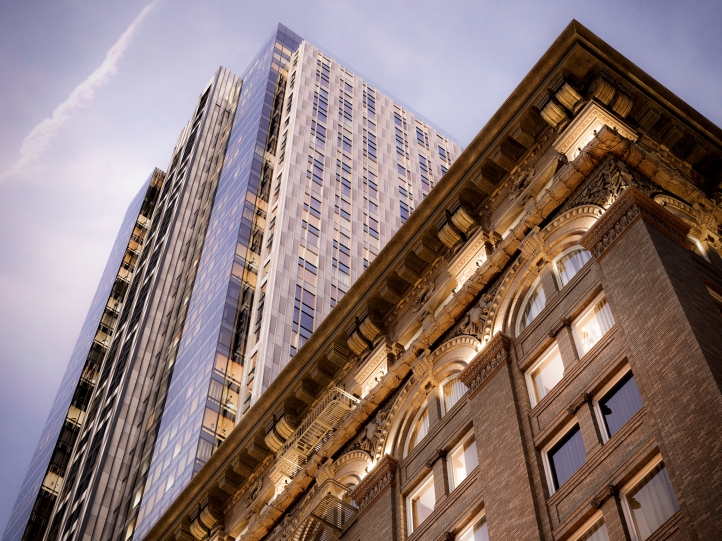
Four Seasons Private Residences San Francisco at 706 Mission Street
- Original Opening: 1903
- Historical significance: Set within the historic Aronson building originally designed by Hemenway & Miller and built by Abraham Aronson. The building is praised for its “Chicago School” architectural style, which remains today after surviving both the 1906 San Francisco earthquake and the 1989 Loma Prieta earthquake.
- Reopening as a Four Seasons: 2021
Four Seasons Resort The Biltmore Santa Barbara
- Original Opening: 1927
- Historical significance: A Santa Barbara landmark, this storied retreat is celebrated for its Mediterranean-inspired design, oceanfront setting, and enduring sense of romance, evoking the glamour of a classic Old Hollywood escape.
- Reopening as a Four Seasons: 1987
Four Seasons Hotel and Residences at The Surf Club, Surfside, Florida
- Original Opening: 1930
- Historical significance: Formerly a social club that opened on New Year’s Eve in 1930, The Surf Club was designed by renowned architect Russell T. Pancoast, with its Mediterranean Revival building and historic beachside cabanas thoughtfully restored during the renovation. For decades, The Surf Club served as one of Miami’s most storied social destinations, welcoming generations of notable guests and embodying a timeless sense of glamour and understated elegance. Set within the club’s original ballroom, Champagne Bar reflects the soulful charm and spirit of The Surf Club’s early years while preserving the character and sense of place that have defined the property for nearly a century.
- Reopening as a Four Seasons: 2017
Sensei Lanai, A Four Seasons Resort
- Original Opening: 1991
- Historical significance: Located on the lush Island of Lanai, a former pineapple plantation that once produced up to 75 percent of the world's pineapple supply. Managed by Four Seasons since 2005, the property now serves as a wellness retreat.
- Reopening as a Four Seasons: 2005
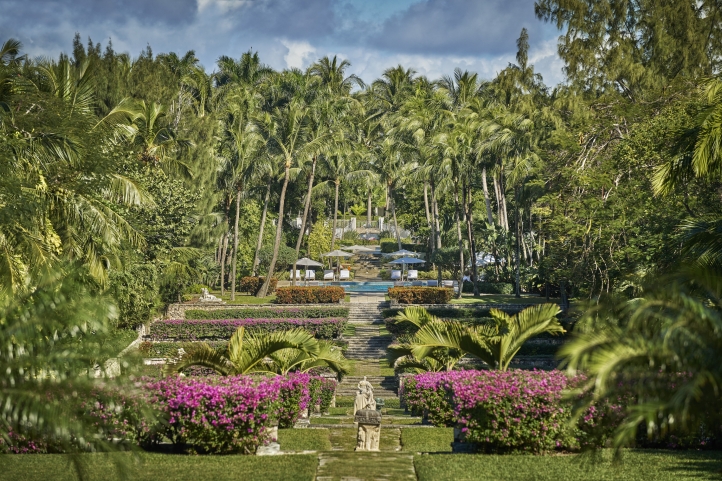
The Ocean Club, A Four Seasons Resort, Bahamas
- Original Opening: 1962
- Historical significance: Designed by Palm Beach architect John Volk, the original Ocean Club on Paradise Island in the Bahamas opened in 1962 as an exclusive 52-room hideaway for celebrities, international jetsetters, and those drawn to a glamorous lifestyle. Commissioned by A&P supermarket heir Huntington Hartford II, the luxurious resort showcased elegant British Colonial-style architecture — now embodied in the resort’s Hartford Wing. Hartford also acquired the famed Cloisters, the remains of a 12th-century French Augustinian monastery, which continue to embellish the property’s lush grounds today.
- Reopening as a Four Seasons: 2017
ASIA PACIFIC
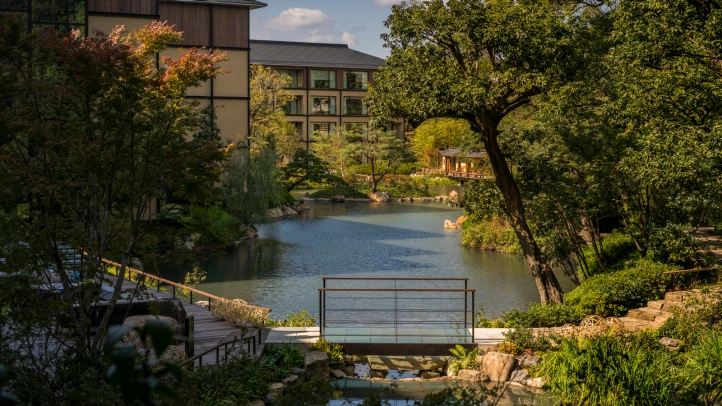
- Original Opening: Located in a 12th century pond garden
- Historical significance: A secluded property nestled amid a 2-hectare (5-acre) 12th century pond garden defines serenity and is also situated just moments from key centres of business, culture, history and natural wonders.
- Reopening as a Four Seasons: 2016
EUROPE, THE MIDDLE EAST & AFRICA
Four Seasons Astir Palace Hotel Athens
- Original Opening: 1960
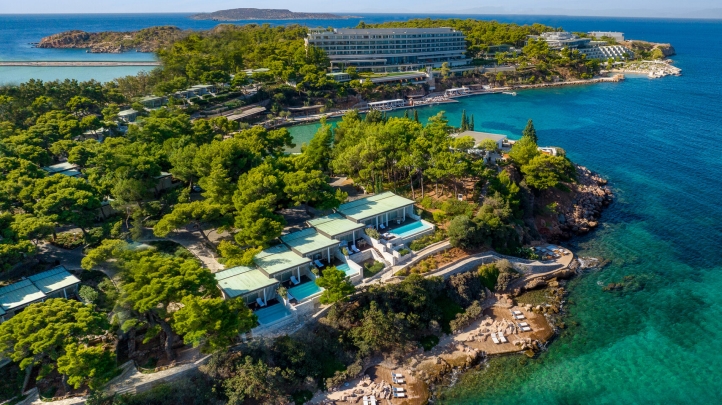
- Historical significance: Originally the Astir Palace Hotel, this hotel was rebranded as the first Four Seasons property in Greece in 2019. Located on the lush Lemos Peninsula in the Athenian Riviera, just a 30-minute drive from Historical Athens City Center.
- Reopening as a Four Seasons: 2019
Four Seasons Hotel des Bergues Geneva
- Original Opening: 1834
- Historical Significance: The historic neo-classical building, steps away from Lake Geneva, was specially prepared for the first meeting of the League of Nations in 1920s. The hotel’s original ballroom Salle des Nations boasts soaring ceilings, grand chandeliers and large gilt mirrors.
- Reopening as a Four Seasons: 2005
- Original Opening: 1473
- Historical significance: Originally known as the Palazzo della Gherardesca, built by Renaissance visionary Bartolomeo Scala, is a masterpiece of history and elegance and home to Florence’s biggest private garden, filled with statues, fountains and centuries-old trees. The Palazzo Del Nero, originally built in the 16th century as a noble country house, now houses 36 guest rooms and suites including the Presidential and Garden Suite. The property is just a 10-minute walk from Piazza del Duomo, home to the city’s iconic landmarks.
- Reopening as a Four Seasons: 2008
Grand-Hôtel du Cap-Ferrat, A Four Seasons Hotel
- Original Opening: 1908
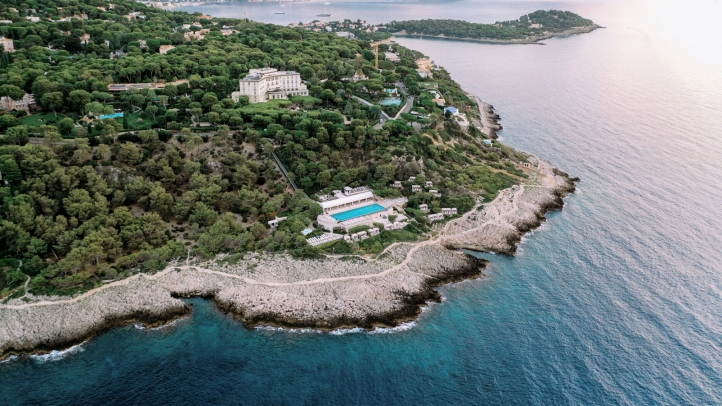
- Historical Significance: The Côte d’Azur’s legendary palace hotel still features the original Rotunda, designed by Gustave Eiffel, the engineer and visionary of the Eiffel Tower. The property’s pool club, Club Dauphin, a signature symbol since 1939, is celebrated as one of the world’s most beautiful swimming pools.
- Reopening as a Four Seasons: 2015
Four Seasons Hotel Gresham Palace Budapest
- Original Opening: 1906
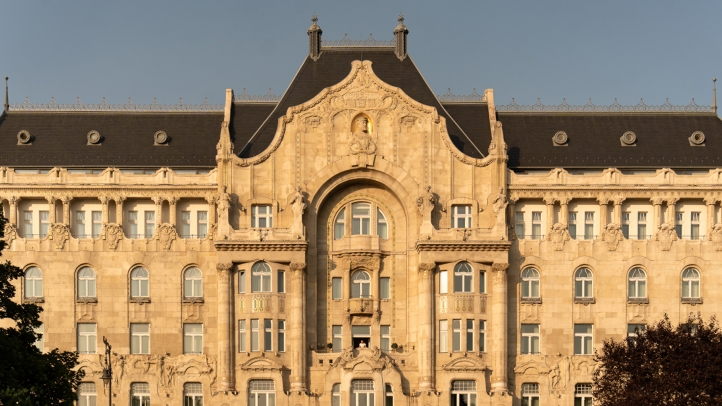
- Historical Significance: A restored Art Nouveau building showcasing breathtaking glass ceilings, ironwork gates, stained glass, floor mosaics and dramatic chandeliers. Nicknamed the “Palace of Hearts,” the building carries a romantic legend: its architect, Zsigmond Quittner, is said to have been in love with one of the future tenants, discreetly embedding hundreds of small heart motifs throughout the design. On the banks of the Danube River, at the foot of the Chain Bridge, this property has print collections on display, featuring the work of 20th-century Hungarian artists.
- Reopening as a Four Seasons: 2004
Four Seasons Hotel George V, Paris
- Original Opening: 1928
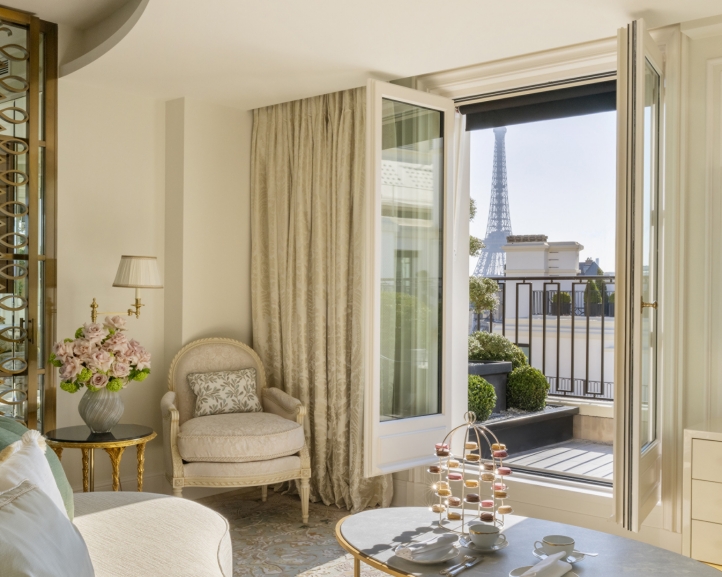
- Historical significance: Built in 1928 when construction of the hotel began, the cellar is located 14 metres (46 feet) underground. Nicknamed Rock Cellar because of its 6-metre-high (20-foot-high) limestone vaults, it was built in an old quarry whose stone was used for the city’s Arc de Triomphe. The historic eight storey landmark is home to one of the city’s most legendary wine cellars, Cave Roc, which was walled up at the outbreak of World War II to prevent enemy intrusion. During the hotel’s renovation in 1997, the iconic cellar was preserved and today houses some of the finest wines in the world.
- Reopening as a Four Seasons: 1999
- Original Opening: Estate dating to 1086; West Wing from 1744
- Historical Significance: Originally known as Dogmersfield Park, the estate now redefines luxury in the English countryside. The rich history of this property includes hosting the first meeting of King Henry with Catherine of Aragon and has hosted many royals over the years.
- Reopening as a Four Seasons: 2005
Four Seasons Hotel Istanbul at the Bosphorus
- Original Opening: 1872
- Historical significance: Once a 19th-century Ottoman palace known as Atik Pasha, part of the era’s tradition of waterfront summer residences along the Bosphorus, the property embodies a sense of imperial elegance and grandeur. Its interiors draw inspiration from the Bosphorus itself, with flowing tones of aqua and silver, adorned with light marble, glass, and refined Turkish decorative elements and traditional artwork. The hotel is set along the shores of the Bosphorus in the heart of modern Istanbul.
- Reopening as a Four Seasons: 2008
Four Seasons Hotel Istanbul at Sultanahmet
- Original Opening: Early 20th century
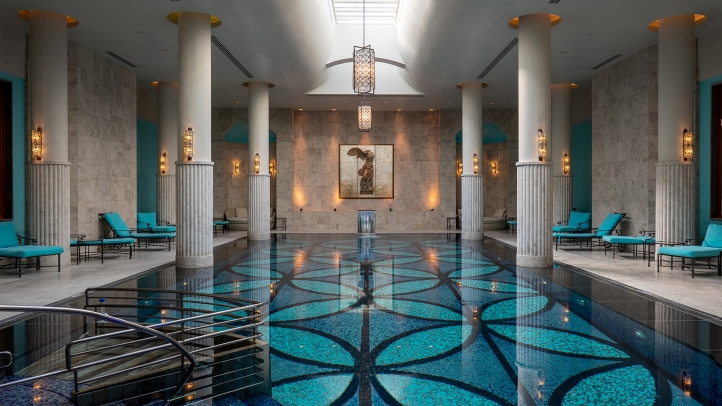
- Historical significance: Originally conceived in a French-inspired style as a guesthouse that welcomed notable writers and intellectuals, and later transformed into a prison, this building defines Turkish neoclassical architecture. Located in the heart of Istanbul’s Old Town, its historic features are best preserved in the southwest wing. The property is surrounded by views of the Hagia Sophia Mosque, the Blue Mosque, and the Marmara Sea. Converted to a Four Seasons Hotel in 1996 and renovated in 2022, original marble and stones were preserved in the entrance of the property elevators and the marble wall inside the Kurna Spa.
- Reopening as a Four Seasons: 1996
Four Seasons Hotel London at Tower Bridge
- Original Opening: 1922
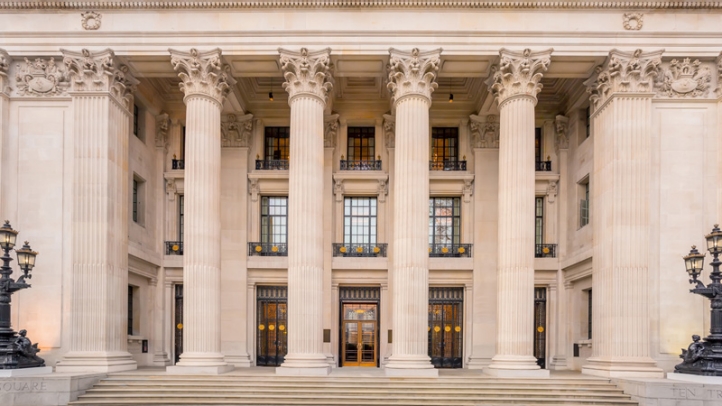
- Historical significance: Within the City of London, the property was once the headquarters of the Port of London Authority, serving as a centre of global trade in the early 20th century. The Grade II*-listed heritage building is set on Tower Hill overlooking the River Thames, with architecture and surroundings that reflect centuries of London’s layered history. It endured the Blitz during the Second World War and stands adjacent to the Tower of London, long associated with notable figures from Tudor history, including King Henry VIII, Queen Elizabeth I and Anne Boleyn. In 1946, the General Assembly of the United Nations held its inaugural reception here, in what is now known as the UN Ballroom.
- Reopening as a Four Seasons: 2017
Four Seasons Hotel and Private Residences Madrid
- Original Opening: 1887
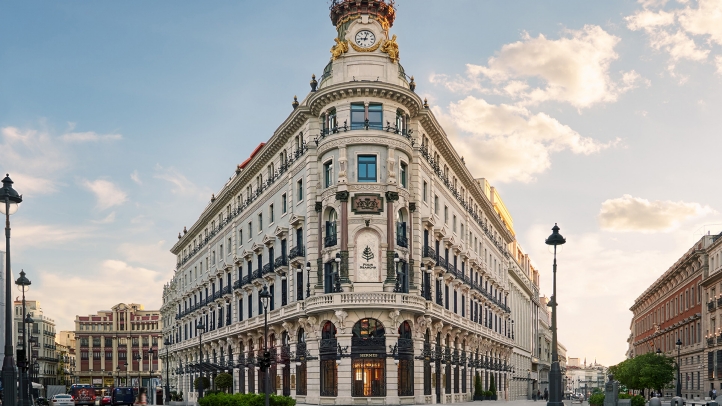
- Historical Significance: The property is comprised of seven historic buildings in the heart of the Spanish capital, which has housed four different banks throughout the centuries. The Royal Suite remains practically untouched since the building was first erected in 1887 and used to house the conversation room of the Madrid Casino, as well as the boardroom and chairman’s office of the former Banco Español de Crédito. The library also houses an English mahogany drum table topped with green leather from the era of George III (early 19th century) as well as a Charles IV chest of drawers.
- Reopening as a Four Seasons: 2020
Four Seasons Resort Mallorca at Formentor
- Original Opening: 1929
- Historical Significance: Originally opened as the Hotel Formentor, the property has a storied history as a playground for the international glitterati. The original founder, Adan Diehl, developed the hotel into a luxurious cultural haven, with Four Seasons 2024 restorations upholding this vision.
- Reopening as a Four Seasons: 2024
- Original Opening: 15th century
- Historical Significance: An impeccably restored former convent dating to the 15th century was converted to a luxury hotel in 1993, preserving centuries-old frescoes, columns and vaulted ceilings.
- Reopening as a Four Seasons: 1993
- Original Opening: Four buildings – one 16th century, two 19th century, and one 20th century
- Historical Significance: The property is comprised of four riverside multi-era buildings; Baroque (1568), Classical (1827), Renaissance (1883) and modern (2001). Located in the historical heart of the city on the banks of the Vltava River, just steps from all major historical monuments, with views of Charles Bridge and Prague Castle.
- Reopening as a Four Seasons: 2021
Four Seasons Hotel Rabat at Kasr Al Bahr
- Original Opening: Late 18th century
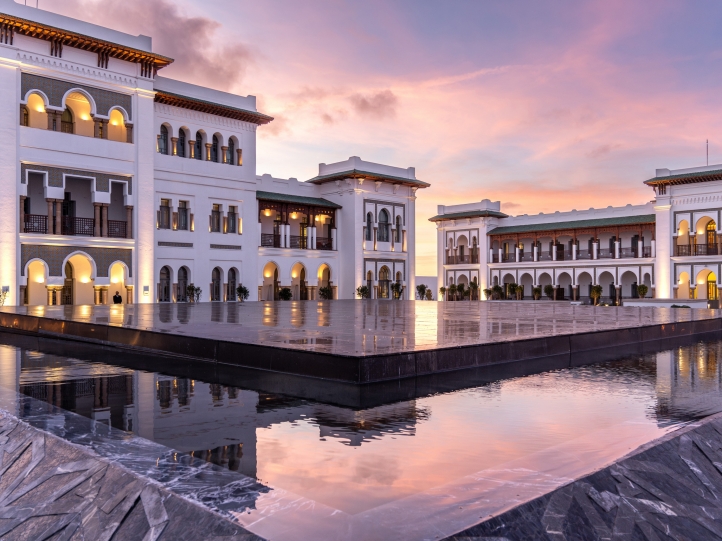
- Historical Significance: Translating to “Palace by the Sea,” Kasr Al Bahr was built at the end of the 18th century as the summer residence of Morocco’s Sultan Moulay Slimane; later serving as a military hospital before closing in 1999 and reopening as a Four Seasons experience in 2024.
- Reopening as a Four Seasons: 2024
Four Seasons Hotel Ritz Lisbon
- Original Opening: 1959
- Historical Significance: This property began as a vision of António de Oliveira Salazar, former Prime Minister of Portugal, who wanted to build a hotel to meet the demands of international tourism following the Second World War. Acclaimed French interior designer Henri Samuel brought this vision to life with an eclectic mix of sculptures, paintings and tapestries. Despite undergoing two renovations since its inauguration, the Hotel’s original spirit and decorative arts from local artists have been preserved.
- Reopening as a Four Seasons: 1998
San Domenico Palace, Taormina, A Four Seasons Hotel
- Original Opening: 14th-century convent, and a Liberty-style structure added in 1896
- Historical Significance: The property is composed of the Ancient Convent Wing built on the site of a 14th-century convent, and the Grand Hotel Wing, a Liberty-style structure added in 1896. On property, La Sala della Grande Madia, displays artefacts dating from the 16th to 18th century, following the Sicilian and Neapolitan school, which belonged to the San Domenico Monastery.
- Reopening as a Four Seasons: 2021
Twenty Grosvenor Square, A Four Seasons Residence
- Original Opening: 1930s
- Historical Significance: The former home of the US Naval Forces in Europe and the first Four Seasons standalone Private Residence, award-winning architects Squire & Partners designed the property, keeping the history and character of the building.
- Reopening as a Four Seasons: 2021
UPCOMING OPENINGS
Danieli, Venezia, A Four Seasons Hotel
- Original Opening: Opened as a hotel in 1822, with buildings dating to the 15th century, 19th and 20th century
- Historical Significance: The Hotel consists of three buildings: the 15th century Palazzo Dandolo and two additions linked by bridges – the 19th century Palazzo Casa Nuova and Palazzo Danieli Excelsior inaugurated in 1950. Hotel Danieli’s rich heritage is on display throughout the property, showcased in the beautifully preserved Venetian Gothic style architecture, art and antiques.
- Reopening as a Four Seasons: 2026
The Park Gstaad, A Four Seasons Hotel
- Original Opening: 1910
- Historical Significance: Since opening in 1910, The Park Gstaad became the first five-star hotel in Gstaad and has remained an iconic property in one of Europe's best-known mountain destinations. The hotel was originally owned by Swiss philanthropist, investor and sportswoman Dona Bertarelli.
- Reopening as a Four Seasons: 2026
- Original Opening: Late 1800s
- Historical Significance: Originally home to the former Dresdner Bank headquarters and built in the late 1800s, located in the city’s historic Mitte district and set along the cobblestone streets of Bebelplatz.
- Reopening as a Four Seasons: 2027
RELATED:



Toronto, M3C 2K8
Canada
 @FourSeasonsPR